The instrument
The Portuguese guitar, explained
What the guitarra portuguesa is, why it has twelve strings and a pear-shaped body, and what to listen for when it plays in a fado show.
Reserve a seat for fado ↗Quick answer
The Portuguese guitar, or guitarra portuguesa, is a twelve-string cittern found only in Portugal and closely tied to fado. In fado, the Portuguese guitar and a wire-strung acoustic guitar usually accompany the singer, and many shows feature both.
What it is
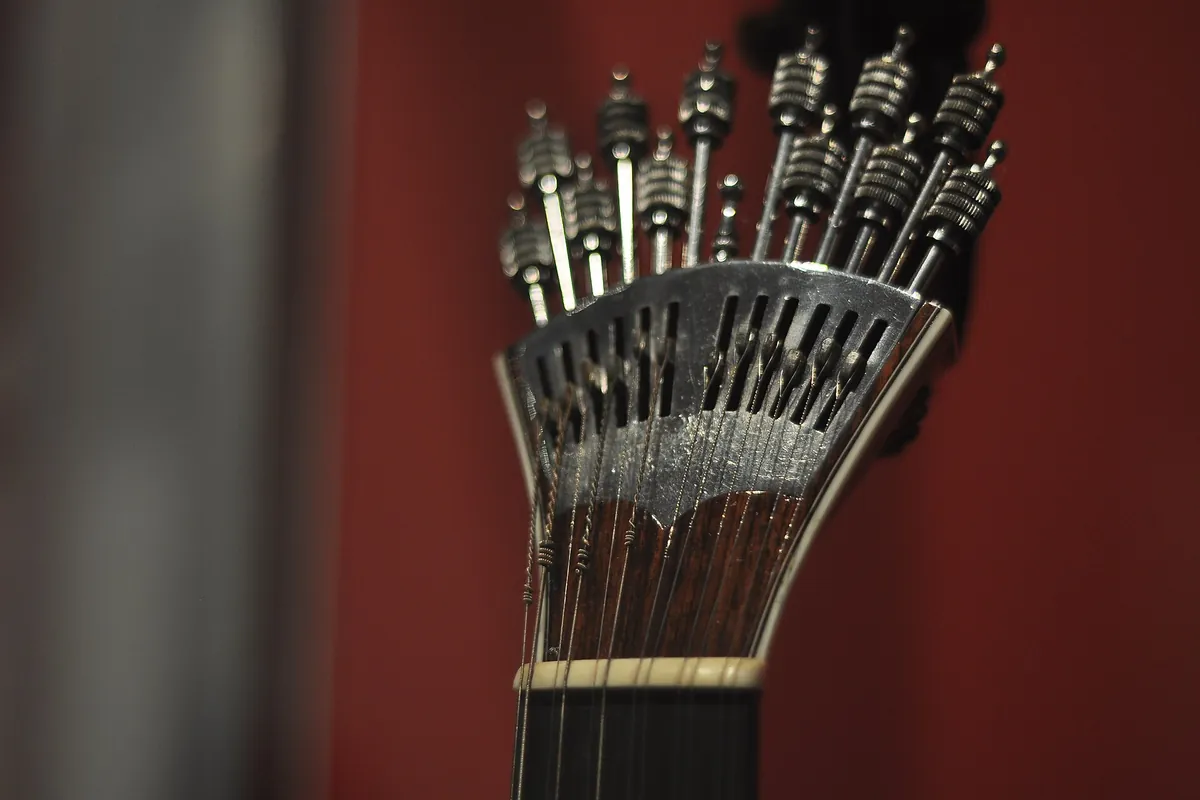
UNESCO calls the Portuguese guitar a cittern shaped like a pear, strung with twelve wires, found only in Portugal and blessed with a large solo repertoire. Wikipedia adds that the strings sit in six pairs and that few instruments still use its watch-key tuners. Look for them at the head of the instrument. The instrument is iconically associated with fado, and you will hear it in almost any live performance of the genre, from a small room to a concert hall. Knowing what it is before the lights go down makes the first notes easier to place, and the difference between this instrument and the acoustic guitar beside it becomes easier to hear.
Where it comes from
According to Wikipedia, the guitar descends from the medieval citole, used in Portugal since the thirteenth century, and citterns were played in theatres and taverns in the seventeenth and eighteenth centuries. An English cittern known as the English guitar arrived around 1750 and shaped the later instrument's tuning system and size. Around the 1850s, the Portuguese guitar emerged as an instrument in its own right and became fashionable through its link with the Lisbon song, fado.
An angel with a cittern
Wikipedia points to a large sculpture from around 1680 in the Alcobaça Monastery, an angel playing the cittern, which depicts the direct ancestor of the Portuguese guitar in detail. It also notes that in 1582 Friar Phillipe de Caverell described the Portuguese people's love for the cittern and other instruments, and that the catalogue of King John IV's Royal Music Library, published in 1649, held cittern music complex enough to suggest highly skilled players. The instrument has a long pedigree behind its fado reputation.
Two models, Lisbon and Coimbra
There are two distinct Portuguese guitar models, the Lisboa and the Coimbra, which differ in scale length, body measurements and finer construction details. Wikipedia describes the Coimbra model as simpler. Fado in Lisbon uses the Lisbon version, while Coimbra fado, sung by men in academic dress, has its own guitar tradition shaped by figures such as Artur Paredes and his son Carlos Paredes. If you hear a Portuguese guitar in a Lisbon show, you are most likely hearing the Lisbon model, though the performers can tell you for certain.
The partner: the viola
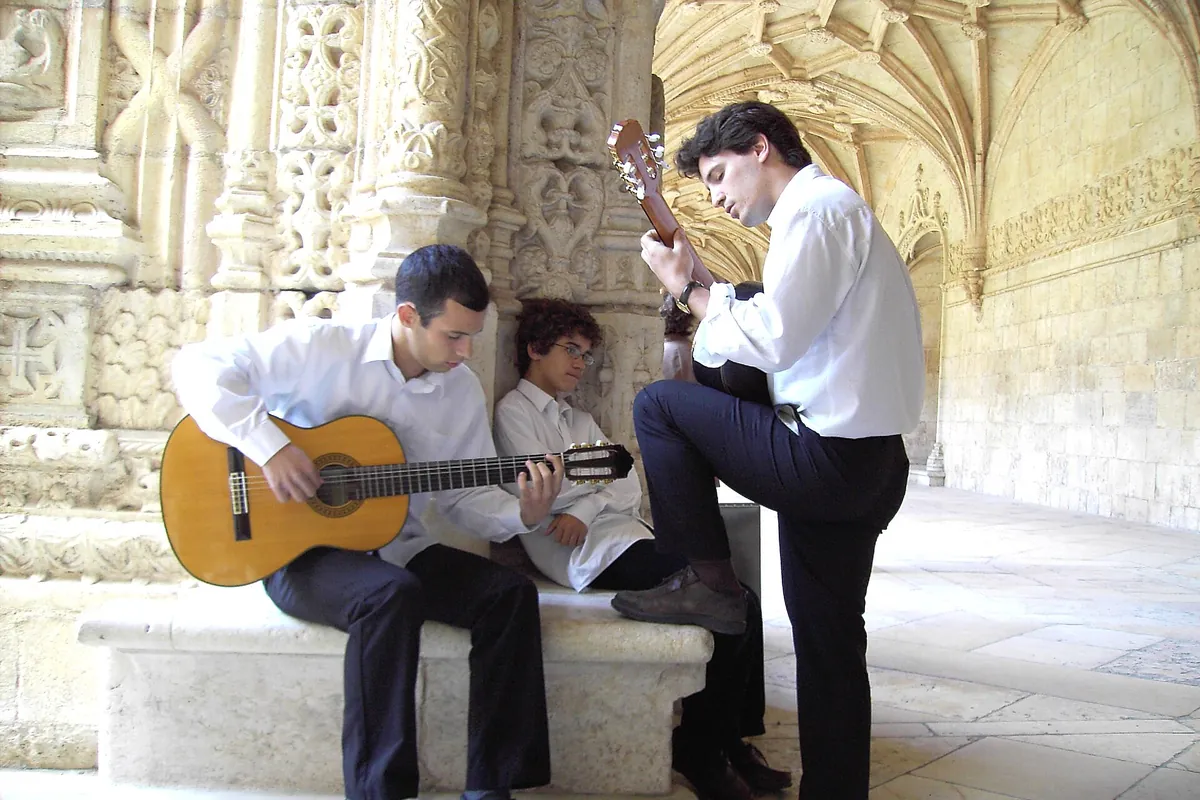
The Portuguese guitar shares the accompaniment with a steel-strung classical guitar called the viola de fado and, now and then, a double bass or bass guitar. UNESCO notes that recent decades have brought setups with a pair of Portuguese guitars, a guitar and an electric bass. In a show with one Portuguese guitar and one acoustic guitar, listen to how the two instruments share the accompaniment under the voice.
Solo playing
The Portuguese guitar is not only an accompanist. Wikipedia notes that it also plays solo pieces called guitarradas, and that its wide repertoire is often heard in concert halls and at classical and world-music festivals worldwide. If you enjoy the sound in a short show, search for a solo guitar recording afterwards. The instrument carries melodies on its own, and the style is a different pleasure from the sung songs. Look for recordings labelled guitarrada, and give them a few minutes before you decide whether you like them.
Read next: Fado in Lisbon for first-timers
Frequently asked questions
How many strings does the Portuguese guitar have?
Twelve wire strings, in six courses of two. UNESCO describes it as a pear-shaped cittern unique to Portugal.
Is it the same as a classical guitar?
No. The Portuguese guitar has twelve wire strings in six courses. In fado it shares the accompaniment with the viola de fado, a steel-strung classical guitar, according to Wikipedia.
Sources